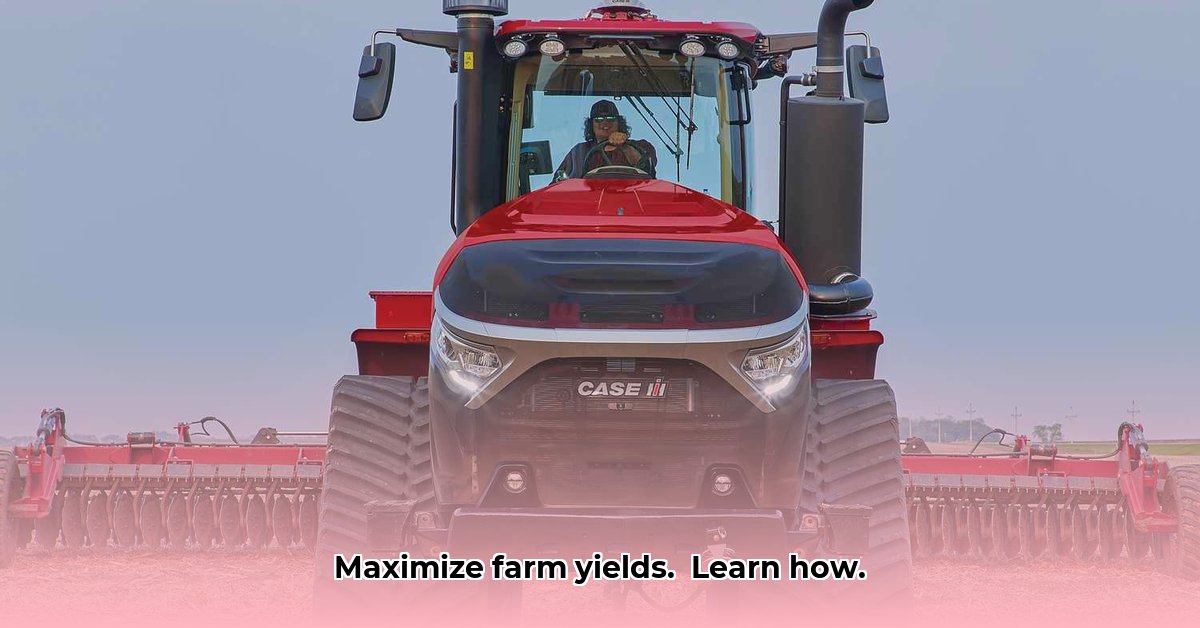
Largest Case Tractor: Boosting Yields Now, Sustainably?
The Case IH Steiger 715 Quadtrac, a behemoth in the agricultural machinery world, boasts a potent 715 horsepower engine, reaching 778 horsepower at peak performance. This raw power allows for rapid field work, significantly reducing labor costs and potentially boosting yields. However, the environmental implications of such a powerful machine necessitate a careful examination. Can high efficiency and environmental responsibility coexist? This article explores the potential benefits and drawbacks of the Steiger 715 within the context of sustainable agriculture. For more information on agricultural machinery costs, check out this helpful resource: Tractor Costs.
Power and Productivity: A Giant Leap in Efficiency
The Steiger 715's power translates to dramatically reduced fieldwork time. Fields are plowed and planted in a fraction of the time compared to less powerful machines. This increased efficiency isn't just about speed; it frees up valuable time for other essential farm tasks, improving overall farm management. The potential for increased profit is substantial. However, this efficiency comes at a cost—fuel consumption and potential soil compaction that must be addressed.
Precision Farming: Technology Meets Sustainability
Beyond brute strength, the Steiger 715 incorporates smart technology. Features like AFS AccuGuide auto-steering and AccuTurn minimize overlaps during planting, spraying, and fertilizing, resulting in reduced waste of valuable resources (seeds, fertilizers, pesticides). This translates to cost savings and a reduced environmental footprint—less pollution and more efficient resource utilization. This exemplifies how technology can enhance sustainable farming practices.
Fuel Consumption: A Balancing Act
The Steiger 715's high horsepower inevitably leads to significant fuel consumption. This is a crucial sustainability concern. While the tractor's speed increases acreage coverage, precise fuel efficiency data (gallons/acre or liters/hectare) under various conditions are essential for a comprehensive environmental impact assessment. Further research is needed to quantify the true cost of this operational efficiency and explore the viability of alternative fuels (biodiesel, hydrogen). A critical data point missing is the actual fuel consumption per acre.
Soil Compaction: The Weight of the Issue
Weighing up to 72,000 pounds, the Steiger 715 raises concerns about soil compaction. Compacted soil impairs water absorption, negatively impacting plant growth and soil fertility. Long-term effects on various soil types require further investigation. Mitigating strategies include adjusting tire pressure based on soil conditions and exploring advanced undercarriage systems. Balancing efficient farming with healthy soil is paramount.
Mitigating Negative Impacts: A Holistic Strategy
To harness the Steiger 715's power while protecting resources, a multi-pronged approach is necessary:
- Strategic Tillage: Plan tillage practices to maximize the tractor's capabilities and minimize soil disturbance.
- Precision Farming Optimization: Fully utilize the Steiger 715’s advanced technologies for precise input application to minimize waste.
- Tire Pressure Management: Adjust tire pressure according to soil conditions to reduce compaction.
- Alternative Fuel Exploration: Investigate cleaner fuels to reduce the environmental impact.
Long-Term Sustainability: A Look Ahead
The Steiger 715's environmental and economic impact extends beyond a single growing season. Consider its entire lifecycle—fuel consumption, long-term soil health effects, and overall carbon footprint. Its long-term contribution to sustainability must be evaluated, not just immediate productivity gains. Responsible long-term planning is key.
The Big Picture: Powerful Technology, Responsible Use
The Steiger 715 represents a significant leap in agricultural technology, offering increased efficiency and lower labor costs. However, responsible use is paramount. Prioritize precision farming techniques, acknowledge potential environmental consequences, and actively seek mitigation solutions. This powerful machine can be a valuable asset in sustainable farming, but its use requires careful consideration.
Areas for Further Research: Unanswered Questions
Further research is crucial to fully understand the Steiger 715’s role in sustainable agriculture:
- Detailed Fuel Use Analysis: Precise data on fuel consumption per unit area under various conditions are needed.
- Long-Term Soil Health Impact: Comprehensive, long-term studies on the tractor's effects on different soil types are crucial.
- Alternative Fuel Viability: Further research into the feasibility and cost-effectiveness of alternative fuels is essential.
The Steiger 715's sustainability remains a subject of ongoing discussion, highlighting the importance of balancing productivity with environmental stewardship. Understanding the long-term consequences is key for a sustainable agricultural future.